The Best Time of Day to Eat Street Food in China: A Complete Chronological Guide
Why Timing Matters
In China, the best snacks vary by hour, not just city. Walk a Beijing hutong at 7 AM and jianbing griddles sizzle on every corner. Return at 2 PM and the same street is empty. At 8 PM, it has become a lamb skewer bazaar. Understanding this rhythm is what separates eating a freshly made shengjian bao with perfectly crispy bottoms from eating one sitting under a heat lamp. This guide maps exactly what to eat at every hour, based on when vendors prepare fresh batches and when regulars line up, across all six cities.
Dawn Patrol: Breakfast (5:30 AM to 9:00 AM)
Morning is when street food infrastructure flexes hardest. Vendors pick up fresh dough and vegetables at wholesale markets by 4 AM. By 5:30, the first griddles are hot.
Beijing: Jianbing Rush Hour (6:00 to 8:30 AM)
The jianbing cart is Beijing morning lighthouse. 6:45 AM is the sweet spot: the vendor has found their rhythm, batter consistency is perfect, and the queue has not yet stretched past four people. By 8:15 the rush peaks. By 9 AM, the best carts are packing up. Near Peking and Tsinghua universities, student-priced jianbing costs just RMB 6-8 versus RMB 15-20 on Wangfujing.
Shanghai: The Shengjian Bao Window (6:30 to 8:30 AM)
Shanghai shengjian bao stalls start frying at 6:30 AM. The first batch is the best batch: the pan is fresh, the oil clean, and the buns get even heat distribution. Yang Fry Dumplings on Yunnan Road goes through 8-10 pans between 6:30 and 9 AM. Each pan holds about 70 buns and takes 12 minutes. Our editors swear by the morning xiaolongbao at Nanxiang near Yu Garden: Go at 7:30 AM on a weekday. The morning dough is most elastic.
Guangzhou: Dim Sum Dawn (7:00 to 11:00 AM)
At Guangzhou Panxi Restaurant, the first dim sum carts roll out at 7 AM sharp. Arrive at 7:15, order jasmine tea, claim a table near the kitchen door. The har gow and cheong fun are never better than in that first 20-minute wave. On Sundays, families arrive at 7 AM and stay for hours -- do not show up at 10:30 AM expecting a quick table.
Lunch Rush: Substantial Eats (11:30 AM to 1:30 PM)
Lunchtime street food leans heavier and more substantial than breakfast. In many cities, the best lunch stalls close by 2 PM because the proprietor has made their daily target and goes home.
Xian: Liangpi and Roujiamo Lunch Combo
Xian power lunch is a bowl of liangpi and a roujiamo. At Wei Jia Liangpi on Dapiyuan Street in the Muslim Quarter, the lunch line forms at 11:20 AM and the liangpi is at peak freshness between 11:30 AM and 12:30 PM. After 1 PM, the noodles absorb too much dressing and lose their prized al dente bite.
Chengdu: The Vanishing Noodle Window
Chengdu best dan dan mian shops are lunch-only: make 200 bowls, sell out, go home. Our team tracked five noodle shops near Sichuan University and found four sold out by 1:15 PM daily. The lunchtime mala tang around Jianshe Road uses ingredients from the 10 AM vegetable restock -- lunch customers get first pick at the freshest produce.
Afternoon: The Sweet Spot (2:00 PM to 5:00 PM)
The afternoon lull belongs to desserts and tea houses. In Beijing, tanghulu vendors appear when temperatures drop; the best time to buy is 3:00 PM when sugar has been dipped fresh. In Guangzhou, egg tarts at Lian Xiang Lou come out at exactly 2:45 PM -- the first tart out of the oven has maximum pastry flake and perfect custard wobble. At Chengdu Heming Tea House in People Park, spend 20 RMB on jasmine tea and 8 RMB on bingfen, then sit for hours watching retirees play mahjong. This is peak Chengdu: spicy food in the morning, tea and sweets in the afternoon, more spicy food at night.
Golden Hour: Night Market Prime Time (5:00 PM to 10:00 PM)
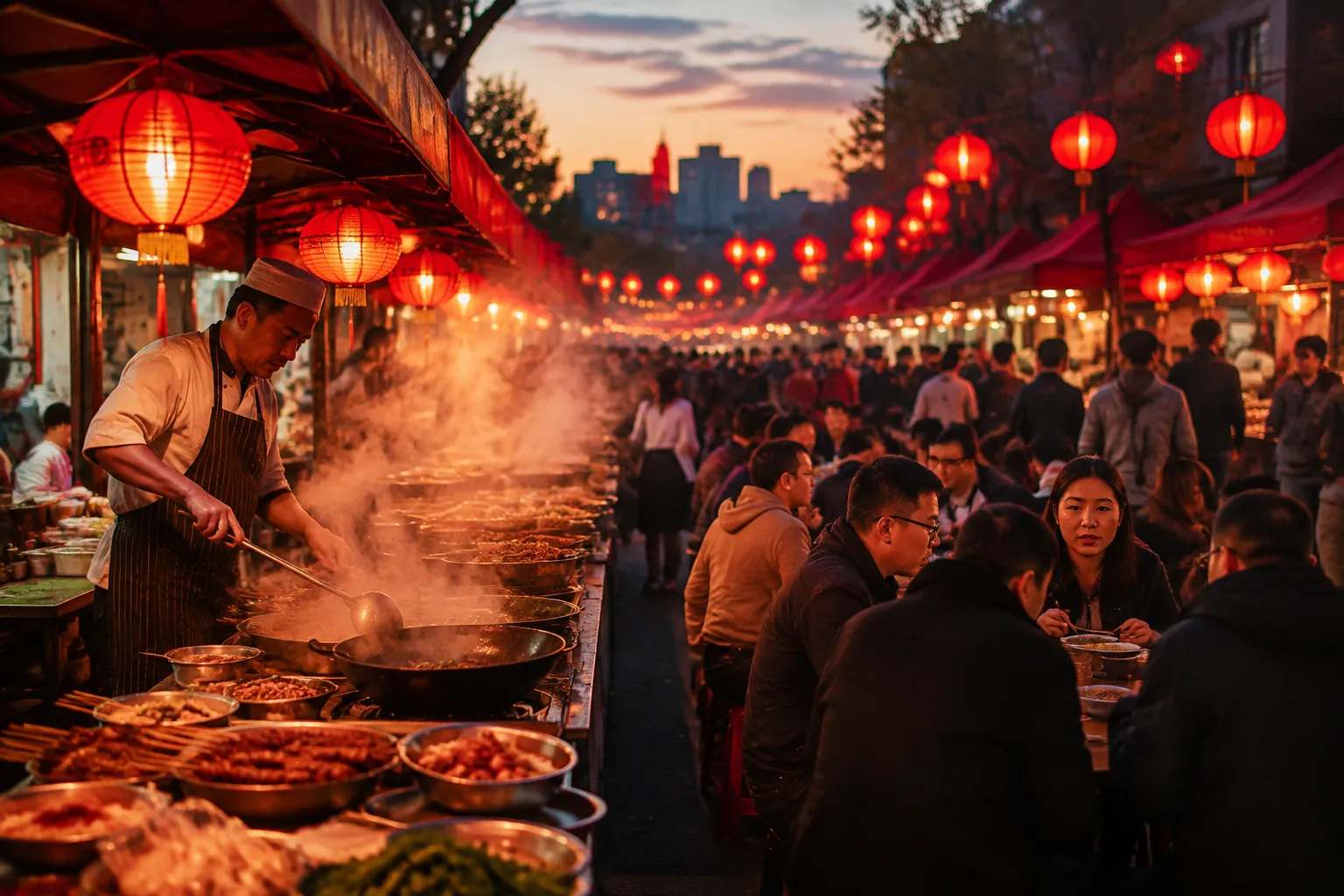
The main event. Chinese night markets detonate at dusk. By 6 PM, smoke is visible from blocks away and queues stretch 20 deep.
Xian Muslim Quarter: 6:00 PM Sharp
Lamb skewer grills fire up at 5:30 PM and by 6 PM the cumin-scented smoke fills every alley. Look for charcoal, not gas. Charcoal produces a specific heat that sears lamb faster with a smokier crust. Arrive at 5:45 PM, walk the full length first (about 15 minutes), note which stalls use charcoal and have local queues, then start eating at 6 PM. By 7 PM the crowd density triples and you will spend more time waiting than eating. Walk at least three blocks deeper than the main tourist drag -- the side streets Dapiyuan and Sajinqiao are where Xi'an locals actually eat.
Chongqing Jiefangbei: 8:00 PM Showtime
Chongqing night markets are late-risers compared to the rest of China. The city legendary heat means locals eat dinner starting at 7:30 PM. Xiaomian stalls at Jiefangbei do not hit full stride until 8 PM, and the best chuan chuan and mala tang is served between 8:30 and 10:30 PM -- the broth has simmered for hours developing depth but has not yet become overly reduced and salty.
Beijing Guijie (Ghost Street): After 10:00 PM
Guijie does not pretend to be a daytime destination. It specializes in spicy crawfish, grilled fish, and Sichuan dishes served until 4 AM -- the post-bar destination of choice for Beijing night owls. Go between 10 PM and midnight for peak energy. The crawfish are best between May and August; outside of summer, quality drops noticeably.
Late Night / Early Morning (11:00 PM to 3:00 AM)
Late-night mala tang in Chengdu is a different beast from the lunch version -- spicier broth, more adventurous ingredients (more offal, more variety), looser atmosphere. The Jianshe Road stalls that serve until 2 AM operate on rotating shifts -- the late-night crew takes over at 11 PM, each shift bringing slight variations to the broth. In Chongqing, barbecue stalls (shaokao) come alive after midnight near universities and docks: grilled meats, vegetables, tofu, eaten with cold beer at sidewalk plastic tables. The shift workers and night owls dine here, and the food reflects their tastes.
Seasonal Shifts: When the Clock Changes
- Summer (June to August): Everything shifts later by 1-2 hours. Night markets in Chengdu and Chongqing do not get busy until 8:30-9 PM. Morning jianbing stalls close by 8 AM -- vendors cannot stand the griddle heat past that point.
- Winter (December to February): Morning stalls start later (7 AM instead of 6 AM). Night markets wind down earlier (9 PM instead of midnight) in northern cities. Xi'an Muslim Quarter stays busy because charcoal grills provide warmth -- eating lamb skewers in freezing weather near a grill is one of the great winter pleasures of China travel.
- Spring and Autumn: The goldilocks seasons. Schedules follow the patterns described above most closely. Street stalls at their most reliable, vendors at their most energetic.
FAQ: Timing Your Street Food Experience
What is the single best hour for Chinese street food?
6:00 PM to 7:00 PM. You catch night markets at peak freshness (grills just lit, ingredients from afternoon restock) before crowds become chaotic. This holds across Beijing, Chengdu, Xi'an, Shanghai, and Guangzhou.
Is late-night street food safe?
In major cities: yes, with standard caveats. Look for high turnover (freshly cooked food), visible cooking (you can see the grill or pot), and local crowds. Late-night food in Chongqing and Chengdu is often excellent because locals eat late as a cultural norm -- it is not a tourist novelty.
Do night markets operate in winter?
Yes, on shortened schedules. Beijing night markets close by 9 PM in December (vs. 11 PM in July). Xi'an Muslim Quarter operates year-round. Chengdu and Chongqing see slight reductions in outdoor stalls during January-February but indoor stalls stay open.
What if I cannot make the perfect time window?
Eat anyway. A 2 PM jianbing is still a jianbing. A 9:30 PM liangpi is still liangpi. This guide describes the optimal experience, but pretty good Chinese street food still beats most restaurant meals. The most important rule: eat when you are hungry and the food is fresh.
ChineseSnacks Editorial Team
ChineseSnacks is an independent editorial team publishing practical guides to eating street food in China. Every guide is built from verifiable sources: price ranges checked against current market data and online retail channels, snack recommendations cross-referenced with local community feedback (including Reddit's r/beijing and r/chinesefood), brand and product details sourced from official channels, and locations verified against maps and traveler reports. Content is reviewed quarterly, and reported errors are corrected within days.